On-demand course · 8 lessons
Employee Engagement with Gallup Q12
Measure engagement with the Gallup Q12 survey and raise it together with managers.
Or 175+ courses — $1,000 a year

Mike Pritula — course author, founder of Pritula Academy and PapaHR, 21 years in HR.
About 30% of people are engaged at work
The 25% most engaged business units versus the rest
- +22%profitability
- +21%productivity
- −25%turnover
- +10%customer satisfaction
Our students work at
























What is employee engagement?
Employee engagement is a state in which a person is motivated to work effectively, is loyal to the company and takes action on their own for the sake of its results. Of the three factors that shape behavior — motivation, loyalty and engagement — engagement has the strongest link to business results.
The course is about how to measure engagement with the Gallup Q12 survey and raise it: together with managers, through work with employees and through culture.
What the course covers
- The basics and Gallup Q12
- What engagement is, how it differs from motivation and loyalty, the Gallup Q12 questionnaire, working with the results Lesson 1
- 12 elements and an action plan
- A walk through the 12 elements of engagement, the action plan, tasks for managers Lesson 2
- Engagement 1.0 → 3.0
- From an annual survey to frequent pulse surveys and on to employee experience; tools and rollout Lessons 3–5
- Managers
- Training for managers, feedback, working on engagement together Lesson 6
- Working with employees
- The role of the HR director and the HRBP, how a manager’s work changes, effective 1:1 meetings Lesson 7
- Culture
- Elements of a high-engagement culture, OKR, Radical Candor, teamwork Lesson 8
8 on-demand lessons, each with homework and feedback.
Who the course is for
HR managers and HRBPs
Launch an engagement survey and turn its results into an action plan.
HR directors
Build a system for working with engagement and show its link to business results.
Team leaders
Understand what in engagement depends on the manager, and change the way you work with people.
Internal communications specialists
Rely on survey data, not on gut feeling.
One more thing — PapaHR
Try the HR platform Mike built.
Engagement is measured with surveys and raised in a manager’s everyday work with people. PapaHR has tools for both — they come in handy in Lessons 1, 2, 7 and 8:
- Surveys and eNPS18 ready-made surveys: the voice of employees and the mood of teams — before a problem becomes visible.Lesson 1
- RecognitionColleagues send each other thank-you notes right in the system.Lesson 2
- 1:1 meetingsScheduled meetings between a manager and employees.Lesson 7
- OKR goalsCompany and team goals in one place — you can see who is working on what and where things are behind.Lesson 8
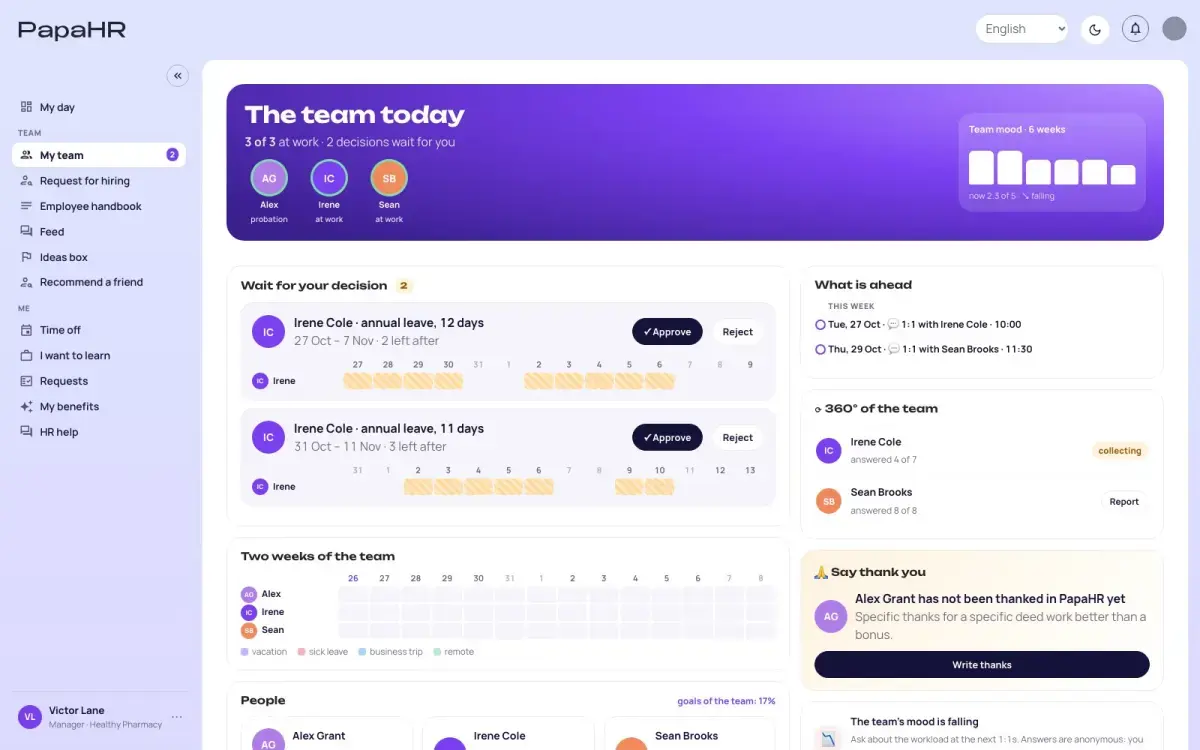
- Freefor up to 25 employees: employees, time off, surveys
- Prowith an academy subscription — up to 50 employees: all sections
- 18ready-made surveys
- 5interface languages
- Telegram · Slack · Teamsand works on your phone
Which zone is your employee in?
In an engagement survey every question is answered on a scale from 1 to 5. An employee’s average score shows their zone — from “actively engaged” to “actively disengaged”. Move the slider: the zones and their boundaries come from Lesson 1.
The employee’s average survey score
3.4out of 5
The default score is an example. The zone boundaries come from Lesson 1.
Engagement zone
Gallup Q12, launching the questionnaire and working with the results — Lesson 1; the action plan for the 12 elements — Lesson 2.
Watch a lesson before you pay.
The full Lesson 1, 34 minutes in English: what engagement is and how it differs from motivation, satisfaction and loyalty, which companies measure it and how many questions their questionnaires have, how Gallup Q12 came about, how to launch the questionnaire and work with the results.
You can discuss the course in the academy’s Telegram chat for English-speaking students (request to join).
Join the chat →
8 lessons: from the survey to a culture of engagement.
First — what engagement is and how to measure it, then three levels of working with it, the role of managers and HR, and finally culture. Every lesson comes with homework and feedback.
01Engagement basics, the questionnaire and the results
- What engagement is
- How it differs from motivation, satisfaction and loyalty
- The most common measurement methods
- Gallup Q12
- How to launch the questionnaire
- How to work with the results
02How to raise engagement
- A walk through the 12 elements of engagement
- Planning actions to raise engagement
- Setting tasks for managers
03Engagement 1.0
- How to launch it
- Tools
- Preparing for the rollout in the company
04Engagement 2.0
- The main differences from 1.0
- How to prepare
- Engagement 2.0 tools
- Rollout in the company
05Engagement 3.0 and employee experience
- Overview
- Engagement 3.0 tools
- How to prepare the company today
- Employee experience as the next step in the evolution of engagement
06How to help managers raise engagement
- Running manager training
- Giving feedback
- Working together
07Working with employees
- The role of the HR director
- The role of the HRBP and People Partner
- How a manager should change the way they work with employees
- Effective 1:1 meetings
08Building a high-engagement culture
- Elements of a high-engagement culture
- Teal organizations and holacracy
- OKR
- Radical Candor
- Teamwork
One course — or the whole academy.
This course
All 8 recorded lessons, homework review and a diploma. 1 year of access.
Get the course →Annual subscription
175+ academy courses, 155+ already in English — including this one, Employee motivation and Conducting Surveys. Lessons, homework review and diplomas for every course.
Subscribe →For teams
A subscription to 175+ courses (155+ in English) for a team of up to 10 — for example, the HR team and the managers you raise engagement with.
Buy for your team →Together with the Employee motivation course — $660. How engagement differs from motivation is a topic of Lesson 1; the second course is devoted entirely to motivation.
Two courses — $660 →From payment to diploma.
- Lessons at your own paceVideo, slides and materials for every lesson are in your student account, on desktop or phone. 1 year of access.
- Homework with feedbackA practical assignment for every lesson, with feedback.
- Questions in the chatYou can discuss the course and your own cases in the academy’s Telegram chat for English-speaking students (request to join).
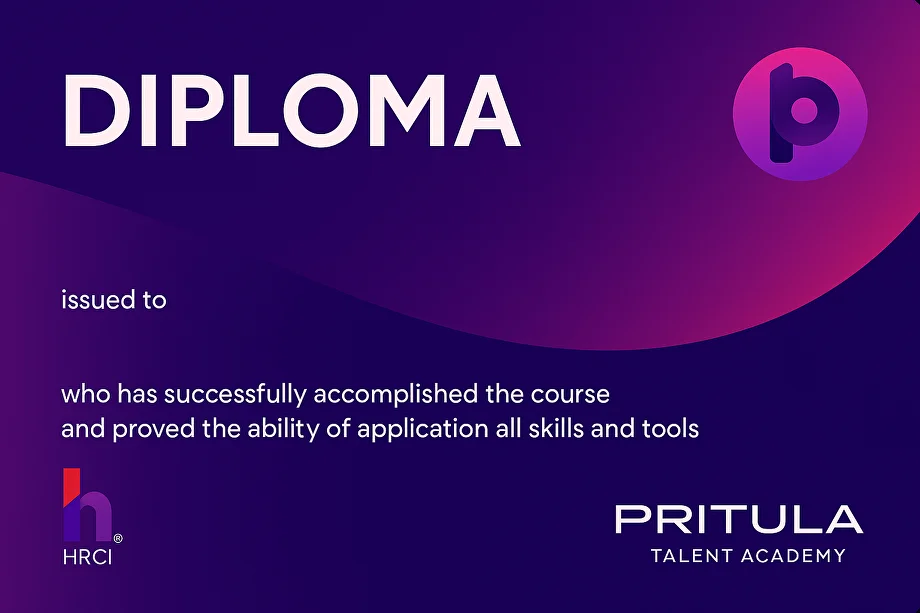
- DiplomaComplete the course assignments and get an Accredible diploma with a unique code.
Learn on your phone
The course fits in your pocket.
- Same login as on desktopVideo, slides and files for every lesson — in the iPhone and Android app.
- Synced progressStart a lesson at your desk — finish it on the way home.
- Homework from your phoneOpen the assignment, write your answer, attach a file and submit it for review.
A diploma that shows on LinkedIn.
After the course you receive a diploma in your name on Accredible — the same platform that issues certificates for Google, Udacity and Kaplan University.
- ✓ A unique code on every diploma — impossible to forge
- ✓ The QR code leads to an online version an employer can verify
- ✓ Add it to your LinkedIn profile in one click
- ✓ Available in English

Taught by Udemy’s #1 HR instructor.
The academy is built on Mike’s 21 years of HR practice.
- 2M+ enrollments on Udemy
- Founder of PapaHR, an AI-native HR platform — free for up to 25 employees
- 21 years in HR: Wargaming, Preply, iDeals, Starlightmedia, Alfa-Bank, PeopleForce
- Certifications PHRi, SHRM-CP, HCI sHRBP; HRCI representative in Eastern Europe
- Two YouTube Silver Play Buttons
What a graduate says.

“An excellent course. 100% applicable at work. Lots of useful tools — questionnaires, assessment forms and so on. The course is built on a ‘take it and do it!’ principle.”Dina OvseanicHR Director, Enter Facebook profile →
A review from a graduate of this course, taken from the survey graduates fill in when they receive their diploma.
Frequently asked questions.
What is employee engagement?
A state in which a person is motivated to work effectively, is loyal to the company and takes action on their own for the sake of its results. Engagement has three sides: a person thinks about how to do the job better, enjoys it and discusses improvements with colleagues. Lesson 1.
How is engagement different from motivation, loyalty and satisfaction?
A motivated person does not necessarily deliver the results the company needs. A loyal person loves the company and stays, but may not go out of their way for it. Satisfaction has the weakest link to performance. Engagement is also about taking action. Covered in Lesson 1.
What is Gallup Q12?
Gallup’s engagement questionnaire of 12 questions. Gallup started with about 150 questions, kept the 35 linked to business results, and then 12 with no overlap. How to launch the questionnaire and work with the results — Lesson 1; all 12 elements one by one — Lesson 2.
How do you measure employee engagement?
With a survey: the employee answers each question on a scale from 1 to 5, and the average score shows the zone — from “actively engaged” to “actively disengaged”. You can check which zone an average score falls into above on this page. Lesson 1.
What engagement surveys are there besides Gallup?
Lesson 1 compares the questionnaires of Gallup, Aon Hewitt, Korn Ferry (Hay), EY and Mercer and how many questions each of them asks.
How many employees are engaged at work?
According to the Gallup estimate Mike cites in Lesson 1 — about 30% of people. The rest are more often not “against the company” but working in a passive mode.
How does engagement benefit the business?
According to the Gallup data in Lesson 1, the 25% of business units with the highest engagement, compared with the rest, have 22% higher profitability, 21% higher productivity, 10% higher customer satisfaction and 25% lower turnover.
How do you raise employee engagement?
Go through the results for the 12 elements, draw up an action plan and set tasks for managers (Lesson 2), run training for managers and give them feedback (Lesson 6), change the way you work with employees and introduce 1:1 meetings (Lesson 7).
What are engagement 1.0, 2.0 and 3.0?
1.0 is an engagement survey once a year and acting on its results. 2.0 adds frequent short pulse surveys and automation. 3.0 assesses engagement from the data of different systems, without questionnaires, and suggests actions to the manager and the employee; this approach is only taking shape. Lessons 3–5.
Who is the course for?
HR managers and HRBPs, HR directors, team leaders and internal communications specialists.
Can I take the course online?
Yes. All 8 lessons are on demand, each with homework and feedback. After the course you get a diploma in your name on Accredible that can be verified online.
Is the course included in the subscription?
Yes. The $1,000 annual subscription opens 175+ academy courses, 155+ already in English — including this one, Employee motivation and Conducting Surveys.
Related courses: motivation and surveys
Still have questions? Write to us.
Telegram WhatsApp info@pritula.academy Telegram chat for English-speaking students (request to join) →