Recorded course · 6 sessions
Employee benefits
Build a package that helps you hire and keep people, not just eat into your budget.
Or 175+ courses (155+ in English) — $1,000 a year

Mike Pritula — course author, founder of Pritula Academy and PapaHR, 21 years in HR.
My benefits packageFor the year · chosen by the employee2
example- ✓Health insurance1450
- ✓Sports150
- Learning and courses200
- ✓Remote work allowance120
- Therapist100
- Extra day off80
Used3720 of 1,000 points
Choice saved in the HR system4
- 1Types of benefitssession 2
- 2Flexible benefitssession 4
- 3Budgetsession 5
- 4Automationsession 6
Our students work at























What are employee benefits?
Employee benefits (or simply benefits) are the perks a company gives employees on top of their salary: health insurance, paid time off and sick leave, flexible hours and remote work, learning, discounts and well-being programs. Together with salary and bonuses, they make up total compensation — Total Rewards.
Put simply, a benefits package is not a “nice gesture” but a tool for hiring, retention and motivation. It works when benefits match what employees need and what the company can afford, and when their value to the business has been calculated.
A benefits system in a company
- Total Rewards
- Where benefits sit in total compensation, the WorldatWork model, which business problems they solve Session 1
- Types of benefits
- Mandatory, health, paid time off, well-being, work-life balance, discounts Session 2
- Business case
- Employee surveys, competitor analysis, economic value and return on investment Session 3
- Flexible benefits
- A cafeteria plan: employees choose their own set from the options offered Session 4
- Strategy and budget
- Employee needs, effectiveness of current benefits, budgeting Session 5
- Automation
- Benefits platforms and what you can already automate in an HRIS Session 6
Six sessions — six steps to a benefits package that pays off.
Who the course is for
HR managers and HR generalists
Build a benefits package from scratch or bring order to the one you have.
Compensation and benefits (C&B) specialists
Add a strong benefits system, flexible benefits and ROI calculations to your compensation work.
HR directors and HR business partners
Justify the benefits budget to the business with numbers, not opinions.
Managers and founders
Understand which benefits are worth the money to retain people you can’t keep with salary alone.
One more thing — PapaHR
Try the HR platform Mike built.
Benefits pay off when decisions are based on data. PapaHR keeps that data at hand — the things we cover in the sessions on the business case, budget and automation:
- Ask employees first18 ready-made surveys and eNPS: find out what matters to people before you spend the budget on benefits.Session 5
- HR budget by line itemPlan, actuals and a full-year forecast by line item — benefits, learning, hiring. The budget is approved right on the platform.Session 5
- The cost of turnoverWhat employee turnover and early leavers cost the company — with ready-to-use text for your CEO.Session 3
- Employees and time off in one systemEmployee records, time off and timesheets — what companies already automate in an HRIS.Session 6
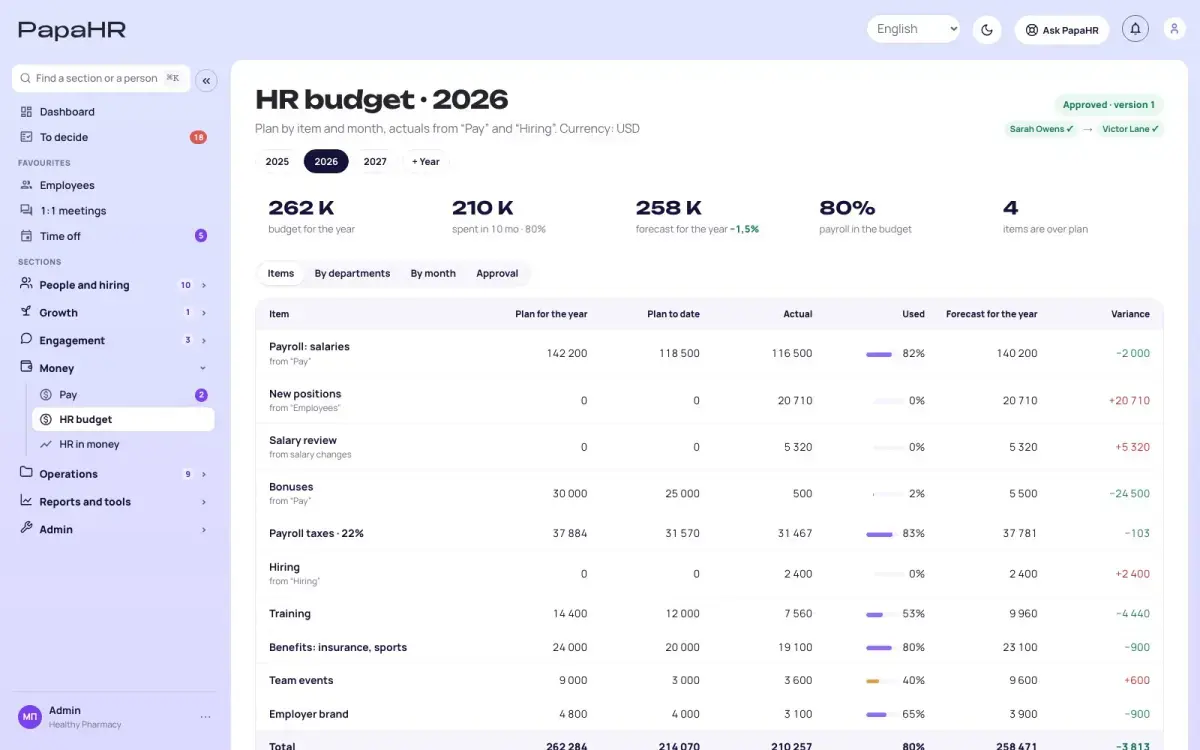
- Freefor up to 25 employees: employees, time off, surveys
- Prowith an academy subscription — up to 50 employees: all sections, including the budget
- 18ready-made surveys
- 5interface languages
- Telegram · Slack · Teamsplus a mobile app
Will a new benefit pay off?
The economic-value business case is covered in Session 3. One way to do it: compare the cost of a benefit with how much the company saves if fewer people leave because of it. Enter your own numbers — the calculation updates itself.
The default numbers are an example, not course data. Estimate how much the benefit will reduce turnover yourself, based on employee surveys and your company’s experience.
Result for the year
- Employees retained
- Savings on replacement
- Cost of the benefit
ROI = (savings − cost) ÷ cost. The business case is covered in Session 3 and the benefits budget in Session 5.
Watch a session before you pay.
Session 1 in English, 43 minutes: what benefits are and how they came about, their place in Total Rewards and the WorldatWork model, what candidates and employees value according to Randstad, Antal and Hays research, and the two meanings of flexible benefits.
You can discuss the course in the academy’s Telegram chat for English-speaking students (request to join).
Join the chat →
6 sessions: from definition to budget and automation.
The course follows the way a benefits system is built in a company: what benefits are and why the business needs them, the types, the business case, flexible benefits, strategy and budget, automation. Every session comes with homework and feedback.
01What are benefits?
- The history of benefits
- The role of benefits in Total Rewards
- The WorldatWork benefits model
- Which business problem benefits solve
- Current research: which benefits employees want
- A real company case
02Types of benefits
- Mandatory benefits
- Employee health care
- Paid time off
- Employee well-being
- Work-life balance
- Discount programs
- Other types of benefits
03The business case for benefits and calculating their ROI
- The link with the employer brand
- Justification through employee research
- Justification through competitor analysis
- Justification through economic value for the company
04Flexible benefits
- What flexible benefits are
- How to design them
- Examples of flexible benefits
05Benefits strategy and budgeting
- Studying the internal and external environment
- Studying employee opinions
- Identifying benefit needs
- Analyzing the effectiveness of existing benefits
- Budgeting benefits
06Benefits automation
- International benefits automation platforms
- What you can already automate in an HRIS
- Automation offers from providers
One course — or the whole academy.
This course
All 6 recorded sessions, homework review and a diploma. 1 year of access.
Get the course →Annual subscription
175+ academy courses, 155+ already in English — including this one, Total Rewards, Bonus System and Job Grading. Sessions, homework review and diplomas for every course.
Subscribe →For teams
175+ courses, 155+ already in English, for a team of up to 10 people — for example, your whole HR team and C&B specialists.
Buy for your team →Together with the Bonus System course — $660. Benefits and bonuses are the two parts of pay beyond base salary.
Two courses — $660 →Three courses: + Job Grading — $990. Benefits, bonuses and grades — the whole reward system.
Three courses — $990 →From payment to diploma.
- Sessions at your own paceVideo, slides and materials for every session are in your student account, on desktop or phone. 1 year of access.
- Homework with reviewA practical assignment for every session, with feedback.
- Questions in the chatYou can discuss the course and your own cases in the academy’s Telegram chat for English-speaking students (request to join).
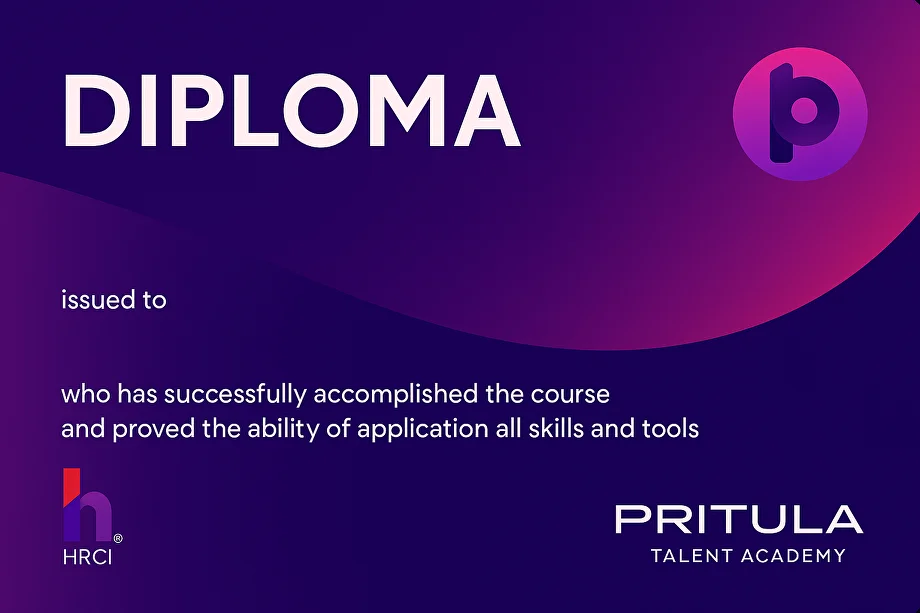
- DiplomaComplete the course assignments and get an Accredible diploma with a unique code.
Learn on your phone
The course fits in your pocket.
- Same login as on desktopVideo, slides and files for every session — in the iPhone and Android app.
- Synced progressStart a session at your desk — finish it on the way home.
- Homework from your phoneOpen the assignment, write your answer, attach a file and submit it for review.
A diploma that shows on LinkedIn.
After the course you receive a diploma in your name on Accredible — the same platform that issues certificates for Google, Udacity and Kaplan University.
- ✓ A unique code on every diploma — impossible to forge
- ✓ The QR code leads to an online version an employer can verify
- ✓ Add it to your LinkedIn profile in one click
- ✓ Available in English

Taught by Udemy’s #1 HR instructor.
The academy is built on Mike’s 21 years of HR practice.
- #1 HR instructor on Udemy — 2M+ enrollments
- PapaHR is free for up to 25 employees
- 21 years in HR: Wargaming, Preply, iDeals, Starlightmedia, Alfa-Bank, PeopleForce
- Certifications PHRi, SHRM-CP, HCI sHRBP; HRCI representative in Eastern Europe
- Two YouTube Silver Play Buttons
What graduates say.

“The course broadened my view of benefits. The most useful topic was the business value of introducing employee benefits — the business case.”Mariia YakymenkoHR Manager (IT) Profile on LinkedIn →

“I highly recommend Mike Prytula’s Compensation and Benefits course! It provided valuable insights into the intricate world of rewards, creating a comprehensive understanding of compensation strategies.”Tetiana RomashkoDuring the course: HR Project Manager, Regional Gas Company ↑ Now: Head of Compensation and Benefits Profile on LinkedIn →

“The course helped me understand how to structure the reward systems in our company more effectively, taking into account both financial and non-financial incentives. What I learned already helps in my everyday work and in raising employee satisfaction.”Anna OliinykHR Operations Specialist, Transporeon by Trimble Profile on LinkedIn →
Reviews come from the surveys graduates fill in when they receive their diploma: about the Creating a Benefits Package course and the academy’s courses on rewards — Compensation & Benefits and Total Rewards.
Frequently asked questions.
What are employee benefits?
Employee benefits are the perks a company gives employees on top of their salary: health insurance, paid time off and sick leave, flexible hours and remote work, learning, discounts and well-being programs. Together with salary and bonuses they make up total compensation (Total Rewards). What benefits are and why the business needs them is covered in Session 1.
What is a benefit?
A benefit is a single perk for an employee on top of salary — for example, health insurance, a sports allowance or an extra day off. The set of such perks in a company is called a benefits package.
What are benefits in simple terms?
Everything an employee gets from the company besides money in the bank: insurance, sports, learning, flexible hours, food in the office, a remote-work allowance. Benefits help companies hire, retain and motivate people.
What types of benefits are there?
Mandatory benefits, health care, paid time off, employee well-being, work-life balance, discount programs and others. Types of benefits are covered in Session 2.
What are some examples of employee benefits?
Health insurance, paid sick leave and extra vacation days, flexible hours and remote work, sports and learning allowances, mental health support, discount programs, equipment for working from home.
What are flexible benefits?
The term has two meanings. The first is benefits that add flexibility to work and life: flexible hours, remote work. The second is a cafeteria plan: employees choose their own set of benefits from the options offered. Flexible benefits are covered in Session 4.
How do you justify benefits to management?
Through employee research, competitor analysis and economic value for the company — for example, how much it saves on replacing people if fewer of them leave. The business case is covered in Session 3; the calculator is above on this page.
How are benefits different from salary and bonuses?
Salary and bonuses are money; benefits are perks. Together they make up total compensation (Total Rewards). Where benefits sit in Total Rewards is covered in Session 1.
Can I take the course online?
Yes. All 6 sessions are on demand, each with homework and feedback. After the course you get a diploma in your name on Accredible that can be verified online.
Is the course included in the subscription?
Yes. The $1,000 annual subscription opens 175+ academy courses, 155+ already in English — including this one, Total Rewards and Bonus System.
How long do I have access?
1 year from the moment your account is opened.
Can I study on my phone?
Yes. Sessions open in the app for iPhone and Android with the same login and password as on your computer, and your progress syncs.
Will I get a diploma?
Yes. Complete the course assignments and get a diploma in your name on Accredible with a unique code and online verification.
More courses on rewards
Still have questions? Write to us.
Telegram WhatsApp info@pritula.academy Telegram chat for English-speaking students (request to join) →