01 · B2B and B2C sales · Online
Course B2B Sales Training from first call to closed deal — by a process, not by guesswork.
A course for SDRs, account executives and anyone who sells. 6 recorded classes: buyer psychology and SPIN, prospecting and BANT qualification, negotiation and objections, a salesperson’s time, CRM and AI, analyzing your own sales.
Recorded course · start with a free overview in English
- 6recorded classes
- Taskson your own sales
- 1 yearof access
- Diplomaon Accredible

Mike Pritula — founder of Pritula Academy and PapaHR, 21 years in HR.
Our students work at






















Sales technique — what is it?
A sales technique is a set of methods a salesperson uses to take a client from first contact to a closed deal: build rapport, uncover needs, present the product, handle objections and agree on the purchase. Techniques let you follow a clear process instead of guessing — in sales to companies (B2B) and to individual customers (B2C).
An SDR (Sales Development Representative) finds potential clients, makes the first calls and sends the first emails, and checks whether a client is a good fit. The account executive then takes over a qualified client and runs the deal to close. The course covers both parts: prospecting and qualification, and the sale itself.
SPIN was created by Neil Rackham: in the 1970s he studied 35,000 sales calls and found that top salespeople listen more than they talk and ask the right questions at the right time.
Four techniques in brief
- SPIN
- Questions about the situation, problem, implication and need-payoff Class 1
- AIDA
- Attention, interest, desire, action Class 1
- FAB
- Features, advantages and benefits of the product Class 1
- BANT
- Checking the client’s budget, authority, need and timing Class 2
The course covers 30+ techniques and methods — from the 5-touch sequence and elevator pitch to LAER and the PDCA cycle.
| B2B — selling to companies | B2C — selling to consumers | |
|---|---|---|
| Lead-to-deal conversion | 20–30% | 10–20% |
| Average deal size | $5,000–50,000, depending on the industry | $100–1,000 |
| Customer acquisition cost (CAC) | $100–500 | $10–100 |
| Customer lifetime value (LTV) | $10,000–100,000+ | $1,000–10,000 |
Who the course is for
SDRs and new salespeople
Prospecting, cold calls and emails, BANT qualification, the 5-touch sequence — and your first deal by a clear process.
B2B and B2C account executives
SPIN questions, presentation and storytelling, objection handling, closing — and your own sales metrics.
Sales managers
One sales method for the whole team, KPIs and the funnel, an improvement plan with PDCA. For the manager — a bundle with the Sales Management course.
Founders and experts
For those who sell themselves: value proposition, social selling on LinkedIn, CRM and AI instead of manual routine.
After class 4
Sales goals — into OKRs and 1:1s.
In class 4 you set SMART goals and quarterly OKRs. In PapaHR, the HR platform Mike Pritula built, they don’t stay in a notebook: the manager sees team goals, 1:1s with each salesperson and 360° feedback on one screen. These sections are in the Pro plan, which the academy’s annual subscription includes for up to 50 employees.
Try PapaHR for free →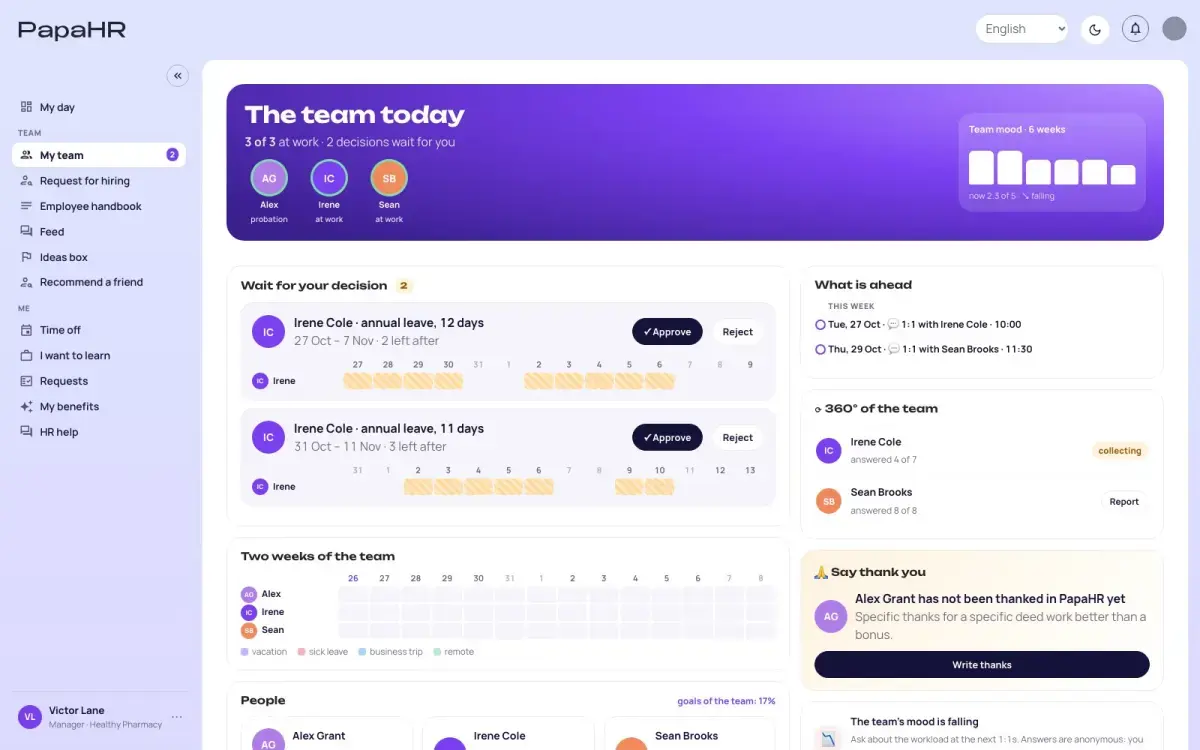
- Freefor up to 25 employees; 1:1s, OKRs and 360° are in Pro
- 30+modules — from the job opening to the exit interview
- 18ready-made surveys
- 5interface languages
- Telegram · Slack · Teamsand works on your phone
How many leads to hit your target?
Work the funnel backwards: from your sales target to deals, leads and touches. Metrics from class 6, the 5-touch sequence from class 2.
Your monthly target
Lead-to-deal conversion —
5%B2C 10–20% · B2B 20–30%40%
Your estimate
- 10deals to close this month
- 50qualified leads to find
- 250touches — 5 per lead
20% conversion sits on the line: the top of the B2C range and the bottom of B2B.
Sales KPIs and the funnel — class 6 · prospecting, BANT and 5 touches — class 2
Get the course — $400 →Watch a free lesson before you pay.
A 35-minute overview in English: why sales skills matter, the course roadmap, the key framework and common mistakes.
You can discuss the course in the academy’s open Telegram chat for English-speaking students.
Join the chat →
6 classes: from first contact to analyzing your own sales.
After every class there’s an assignment on your own sales: SPIN questions for your clients, a value proposition, two prospecting and two negotiation techniques of your choice, a time audit, a test of one tool from class 5, your own sales metrics and a plan to improve them.
01Sales fundamentals and buyer psychology
- The role of sales in business and the main stages of a sale
- AIDA: attention, interest, desire, action
- SPIN: situation, problem, implication and need-payoff questions
- Buyer psychology: FAB and the customer expectations list
- The value proposition canvas
- Trust and long-term relationships: mirroring, reviews and referrals
- Assignment: rewrite the SPIN questions for your company and clients, test them in real sales, and write a value proposition for your product
02Finding and attracting clients
- Online and offline prospecting channels; SWOT analysis of channels
- Target audience and buyer persona
- Cold calls, messages and emails; BANT lead qualification
- The 5-touch sequence: contacts across several channels
- Social media and social selling: personal brand, LinkedIn
- Networking, trade shows and the elevator pitch
- Assignment: pick 2 techniques from the class and describe how you’ll use them in your sales
03Sales technique and negotiation
- The ladder of beliefs
- Active listening and open questions
- Product presentation and storytelling
- Objection handling: LAER and Feel, Felt, Found
- Closing: the alternative-choice close and the direct close
- Assignment: pick 2 techniques from the class and describe how you’ll use them in your sales
04A salesperson’s time and productivity
- Planning the workday: Pomodoro and GTD
- SMART goals and tracking them
- The Eisenhower matrix and time blocking
- CRM to automate routine work
- Work-life balance: the wheel of life, preventing burnout
- Assignment, your choice: log your working time for a week and find the time drains; or set SMART goals and quarterly OKRs; or apply 2 techniques from the class
05Technology, AI and CRM in sales
- Chatbots and AI for working with clients
- Why you need a CRM and how to use it: Salesforce, HubSpot, Zoho CRM
- Reports and analytics in a CRM
- Examples of technology in sales
- Trends: big data, machine learning, AR/VR
- Assignment: test one of the tools from the class in your own sales
06Analyzing results and improving sales
- Sales KPIs: conversion, average deal size, CAC, LTV
- Sales funnel analysis: where clients drop off
- An improvement plan with the Deming cycle (PDCA)
- Customer feedback: surveys, interviews, NPS
- How a salesperson keeps learning
- Assignment: calculate your sales metrics, pick the one that needs the most work, and write 5 ideas to improve it
After the course
What will show up on your profile.
Your Name
Sales Development Representative · B2B and B2C
Experience
- SPIN questions for my clients and a product value propositionClass 1
- BANT lead qualification and a 5-touch sequenceClass 2
- Objection responses using LAERClass 3
- My sales KPIs and 5 ideas to improve the weakest oneClass 6
Licenses & certifications
Skills
- Sales techniques
- SPIN
- Lead qualification (BANT)
- Objection handling
- Social selling
- CRM
Each experience line is a course assignment, with the class number next to it. In classes 2 and 3 you choose the techniques yourself.
What SDRs earn in Europe
$3,200a month — average across 5 countries
€34,400 a year
- France$3,500
- Germany$3,400
- Netherlands$3,400
- United Kingdom$3,400
- Spain$2,300
PayScale, viewed 13 Nov 2026 (data updated in 2025–2026): median base salary of a Sales Development Representative (SDR) before tax, excluding bonuses and commission; average of the medians for 5 countries, each with at least 15 PayScale profiles. Converted at the ECB rate of 2 Nov 2026: €1 = $1.1216, £0.8358. The course does not guarantee a job or salary.
One course — or the whole academy.
This course
All 6 recorded classes, homework review and a diploma. 1 year of access.
Get the course →Annual subscription
175+ academy courses, 155+ already in English — including this one, Sales Management and People Management. Classes, homework review and diplomas for every course.
Subscribe →For teams
175+ courses, 155+ already in English, for a team of up to 10 people — for example, your whole sales team.
Buy for your team →With your manager — $950. This course for the salesperson and Sales Management for the manager: how to build a sales team.
Two courses — $950 →With your manager+ — $1,330. The same two courses plus People Management.
Three courses — $1,330 →From payment to diploma.
- Classes at your own paceVideo, slides and materials for every class are in your student account, on desktop or phone. 1 year of access.
- Homework with reviewEvery class has an assignment on your own sales: SPIN questions for your clients, a value proposition, prospecting and negotiation techniques, your sales metrics and a plan to improve them. You get feedback on each one.
- Questions in the chatYou can discuss the course and your own cases in the academy’s open Telegram chat for English-speaking students.
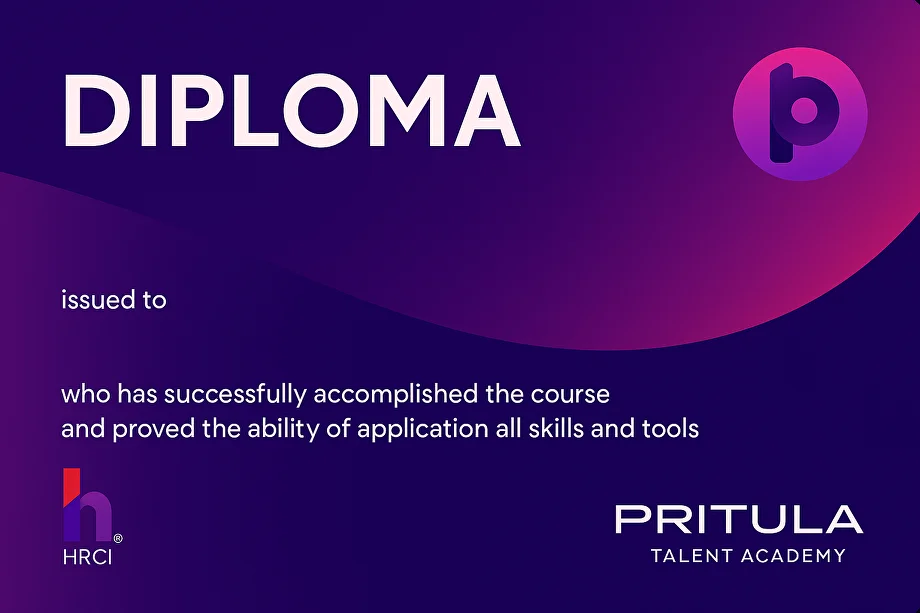
- DiplomaComplete the course assignments and get an Accredible diploma with a unique code.
Learn on your phone
The course fits in your pocket.
- Same login as on desktopVideo, slides and files for every class — in the iPhone and Android app.
- Synced progressStart a class at your desk — finish it on the way home.
- Homework from your phoneOpen the assignment, write your answer, attach a file and submit it for review.
A diploma that shows on LinkedIn.
After the course you receive a diploma in your name on Accredible — the same platform that issues certificates for Google, Udacity and Kaplan University.
- ✓ A unique code on every diploma — impossible to forge
- ✓ The QR code leads to an online version an employer can verify
- ✓ Add it to your LinkedIn profile in one click
- ✓ Available in English

Taught by Udemy’s #1 HR instructor.
The academy is built on Mike’s 21 years of HR practice.
- #1 HR instructor on Udemy — 1.9M enrollments
- PapaHR is free for up to 25 employees
- 21 years in HR: Wargaming, Preply, iDeals, Starlightmedia, Alfa-Bank, PeopleForce
- Certifications PHRi, SHRM-CP, HCI sHRBP; HRCI representative in Eastern Europe
- Two YouTube Silver Play Buttons
How the academy teaches.

“It used to be hard for me to find candidates willing to relocate. Now I look at which of a person’s pain points a move could solve, and I focus on that. Many times more candidates now agree to relocate! It turns out it’s not magic, just the right approach.”Kateryna ZverevaDuring the course: Recruiter · now Head of Recruitment, VisionGrid LinkedIn profile →

“It made me want to pitch vacancies and the company in a new way.”Alina MogilevetsIT Recruiter / HR LinkedIn profile →
Translated from Russian. Reviews from graduates of the Sales in Recruiting and the Funnel course, which applies the same selling approach to hiring, taken from the surveys graduates fill in when they receive their diploma. We don’t yet have reviews of this course with a photo and profile link.
Frequently asked questions.
What is a sales technique?
A sales technique is a set of methods a salesperson uses to take a client from first contact to a closed deal: build rapport, uncover needs, present the product, handle objections and agree on the purchase. Techniques let you follow a clear process instead of guessing.
What are the best-known sales techniques?
SPIN — situation, problem, implication and need-payoff questions. AIDA — attention, interest, desire, action. FAB — features, advantages and benefits. BANT — checking the client’s budget, authority, need and timing. The course covers all four, plus objection handling and closing methods.
What is an SDR, and how is it different from an account executive?
An SDR (Sales Development Representative) finds potential clients, makes the first calls and emails, and checks whether a client is a good fit. The account executive takes over the qualified client and runs the deal to close.
How do you qualify a lead with BANT?
Find out four things: whether the client has a Budget, whether your contact has the Authority to decide, whether there is a real Need, and when they are ready to buy (Timing). Use open questions at every stage of the conversation. Class 2 also covers the alternatives: ANUM, CHAMP, FAINT and MEDDIC.
How do you handle client objections?
The course teaches two methods. LAER: listen, acknowledge, explore, respond. Feel, Felt, Found: “I understand how you feel; other clients had the same doubts; here’s what they found.” Both are in class 3, together with ready-made responses to common objections.
What is a good sales conversion rate?
According to the benchmarks in class 6: 20–30% in B2B sales and 10–20% in B2C. If yours is lower, funnel analysis shows the stage where clients drop off.
When should a company train its salespeople?
When clients are lost at needs discovery, objection handling or closing, when new people join the team, and when the company opens new prospecting channels.
Who is this sales course for?
SDRs and new salespeople, B2B and B2C account executives, sales managers who want to train their team, and founders who sell themselves.
How long are the classes?
34 to 49 minutes each, about 4 hours of video in total. All 6 classes are recorded, with homework and feedback.
Is the course included in the subscription?
Yes. The $1,000 annual subscription opens 175+ academy courses, 155+ already in English — including this one, Sales Management and People Management.
How long is the access?
1 year from the day your student account opens.
Can I study on my phone?
Yes. Classes open in the iPhone and Android app with the same login as on desktop, and your progress syncs.
Will I get a diploma?
Yes. Complete the course assignments and get a diploma in your name on Accredible, with a unique code and online verification. Available in English.
More sales courses
Still have questions? Write to us.
Telegram WhatsApp info@pritula.academy Academy student chat on Telegram →